Blog
Why Does My Knee Hurt When I Bend It? Common Causes Explained
Kneeling down to tie a shoe. Climbing a flight of stairs. Getting up from a low chair after a long meeting. These are the


Peripheral Artery Disease (PAD) isn’t just about clogged arteries. It’s about lifestyle transformation, metabolic health, and reclaiming quality of life. At SFL Medical Group, we guide patients not just through their procedures but beyond them. Recovery isn’t the end. It’s the beginning of a new chapter.
Let’s learn what to expect after your PAD treatment, how long recovery can take, what activities to avoid and adopt, and essential preventive steps to reduce your risk of recurrence.
PAD is a condition where narrowed arteries reduce blood flow to the limbs, commonly the legs. Over time, it results in pain while walking, numbness, or even the risk of limb loss. Procedures like angioplasty, stenting, or bypass surgery restore blood flow, but the healing journey continues long after you leave the operating room.
We’ve seen patients make remarkable transformations when they treat recovery not as a waiting period, but as a proactive process.
Let’s break recovery into clear phases. Every patient is unique, but the following timeline is a general overview of what many can expect.
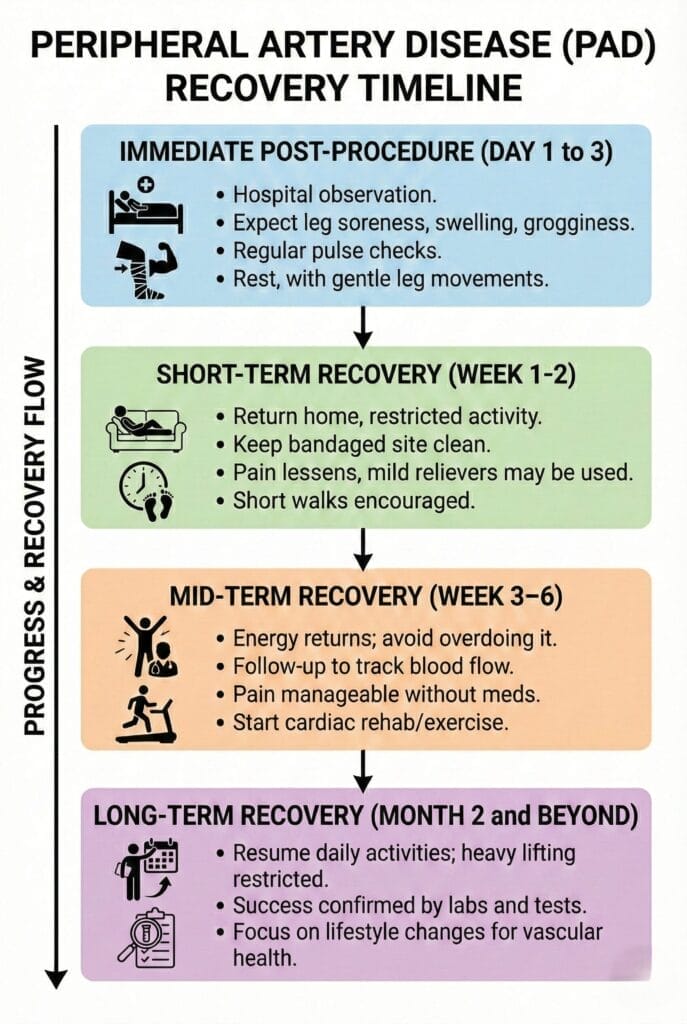
During this time, rest is essential but so is gentle movement. Light foot flexes or ankle rotations keep circulation flowing and prevent complications like blood clots.
At this point, walking short distances around the house is encouraged. Our vascular team often recommends walking for five to ten minutes, multiple times a day.
Energy returns, and so does motivation but this is where overdoing it can backfire.
This is when we recommend starting cardiac rehabilitation or medically approved exercise programs. These programs don’t just build physical strength, they teach you how to move safely.
Most patients resume daily activities at this point, though heavy lifting or intense workouts might still be restricted.
But long-term success isn’t measured just by how you feel, it’s confirmed by your labs, test results, and how well you stick to new routines. More on that below.
Activity levels post-PAD are about balance. Too little can slow healing. Too much can risk complications.
These exercises reduce the risk of post-procedure blood clots and increase mobility.
We recommend discussing these with your care team. In outpatient settings like ours, we tailor movement plans based on recovery speed.
If in doubt, talk to us first. Ignoring pain or pushing through fatigue can risk re-blockage or arterial rupture.
Recovery doesn’t just happen on the outside, it must also happen inside arteries. PAD is often a symptom of systemic atherosclerosis.
Here’s what we ask every patient post-procedure:
Are you committed to lifestyle change?
Here’s why it matters:
Adopting a heart-healthy, anti-inflammatory diet is essential.
We recommend:
Avoid or Limit:
After the recovery phase, consistent movement becomes non-negotiable.
We suggest:
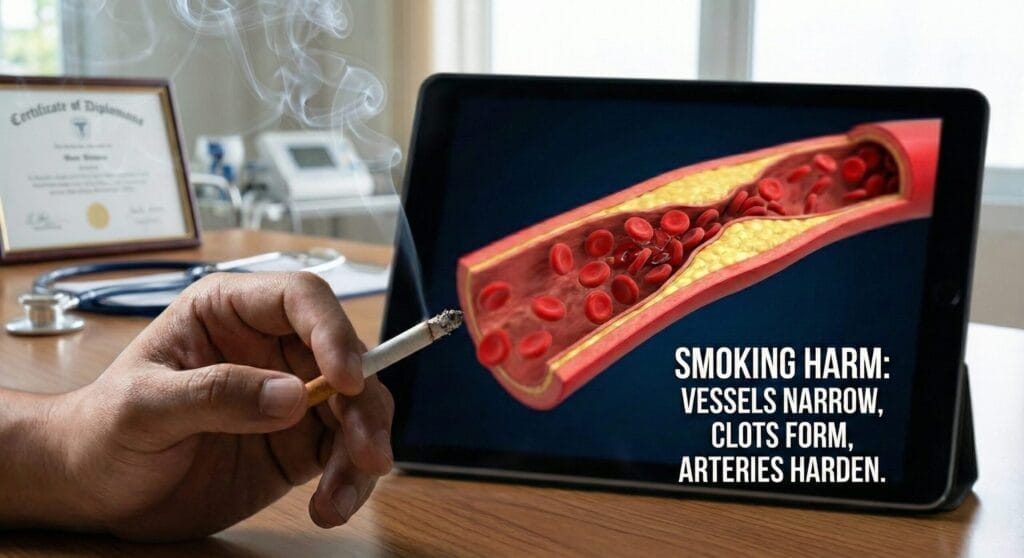
Smoking isn’t just harmful, it undoes every bit of good your procedure achieved.
It constricts blood vessels, increases clot risk, and accelerates atherosclerosis. SFL Medical Group offers smoking cessation programs integrated into your vascular care plan.
PAD patients with diabetes or high blood pressure need regular monitoring because these conditions can re-block arteries even after a procedure.
Stay committed to:
Ongoing care isn’t a suggestion, it’s a cornerstone of long-term success. We monitor more than just symptoms. We track how well your arteries are functioning, how you’re healing, and how your body handles new stresses.
Patients who attend all their follow-ups have significantly better outcomes. That’s why we make scheduling and reminders a seamless part of our care process.
PAD can be isolating, especially before and immediately after treatment. Many patients tell us they felt anxious, embarrassed about mobility, or uncertain about their future.
Recovery is not just physical healing, it’s psychological adjustment.
We advocate:
At SFL Medical Group, we often involve social workers or mental health professionals for a truly integrative recovery.
Your PAD procedure opens a door but you still have to walk through it. Recovery is about small daily wins, choosing a healthier breakfast, taking that walk even when tired, attending every follow-up even when life gets busy.
We’re here not just to treat, but to partner. If you have PAD or had recent PAD surgery, it’s never too early (or too late) to take charge of your future vascular health.
Kneeling down to tie a shoe. Climbing a flight of stairs. Getting up from a low chair after a long meeting. These are the

An ingrown toenail starts small. A little redness along one edge of the nail, maybe some tenderness when you put on a closed shoe