Blog
What Does a Podiatrist Do and When Should You See One?
Almost 8 in 10 Americans have experienced a foot problem at some point in their lives, yet most people couldn’t tell you what a podiatrist



When lesser toes curl downward and dig into shoes, walking can go from effortless to frustrating in a matter of months. At South Florida Multispecialty Medical Group in Miami, we see this pattern often in active adults, people who stand for long shifts, and those with diabetes or nerve-related conditions. Our podiatry team in Miami helps patients understand why claw toes develop, how far the deformity has progressed, and which treatment plan offers the best chance to relieve pain and restore function.
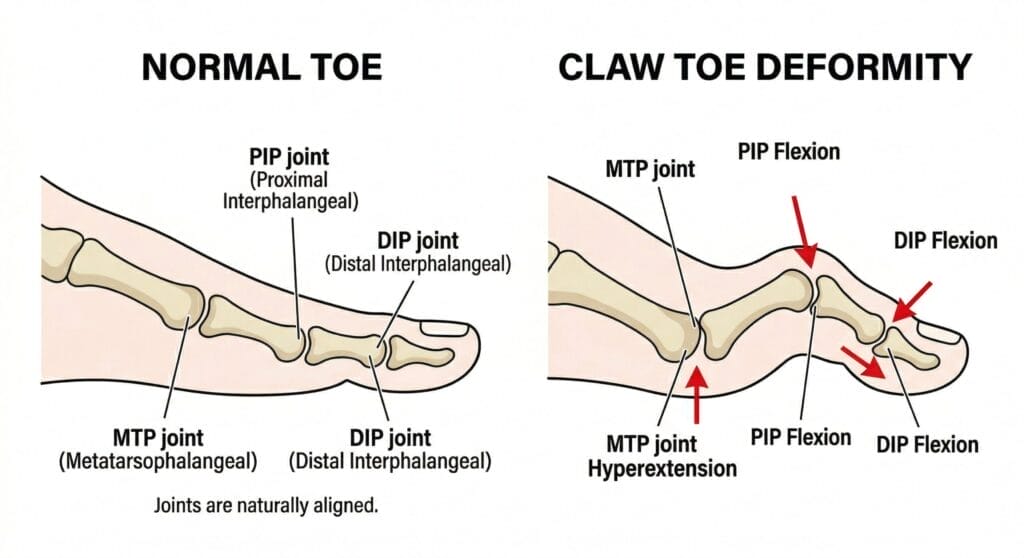
Claw toe is a toe deformity in which the joints bend in a way that makes toes resemble a claw. Typically, the metatarsophalangeal (MTP) joint at the base of the toe hyperextends upward, while the middle (PIP) and end (DIP) joints flex downward. This combination forces toe tips toward the floor or the insole of the shoe, which creates pressure points, calluses, and often significant pain.
Claw toes usually affect the lesser toes, meaning the second through fifth toes, rather than the big toe. Early on, the deformity often stays flexible, meaning the toe can still be gently straightened by hand. Over time, if the underlying issues are not addressed, joints can become rigid and fixed in the clawed position, which limits shoe options and makes conservative treatments less effective.
Toe deformities can look similar at first glance, but each pattern tells us something different about the underlying mechanics.
In practice, we often see some overlap, especially when deformities progress or when more than one mechanical problem affects the same foot. Distinguishing these patterns during an evaluation helps us choose the right combination of stretching, orthotics, and, when needed, surgical correction. Many of these conditions fall within the broader category of forefoot disorders.
Most claw toe deformities begin with an imbalance in the small muscles and tendons that control toe position. When certain muscles overpower their counterparts, they pull toes into abnormal flexion and extension patterns. Over time, tighter tendons and joint capsules reinforce this bent position, especially if shoes continue to press against the toes.
Shoes with narrow toe boxes, pointed fronts, or high heels crowd the toes and shift weight to the forefoot. In that environment, toes often curl to make space, and repeated pressure from above leads to calluses, inflammation, and progressive deformity. Many patients say they wore fashionable, tight shoes for years before symptoms started, which fits the gradual nature of claw toe. Guidance from the American Academy of Orthopaedic Surgeons also emphasizes roomy toe boxes and avoiding tight shoes and high heels.
Claw toes are frequently linked to neurological or systemic conditions that weaken foot muscles. Common contributors include:
In these scenarios, claw toes may signal deeper issues in the nervous system, not just a local foot problem. When we evaluate patients with diabetes or neurologic conditions at SFL Medical Group, we pay close attention to toe alignment, skin integrity, and balance because early intervention can help prevent more serious complications. The Cleveland Clinic overview of claw toes also notes that untreated claw toes may become permanently stiff and can increase ulcer risk in people with diabetes.
Prior fractures, toe dislocations, tendon injuries, or chronic inflammation can also set the stage for claw toes. Damage around joints may change the way tendons glide and how muscles fire, gradually creating the clawed posture. Patients sometimes share a story of one bad toe injury years ago that eventually led to deformity and pain.
Patients often describe a burning or aching pain on top of the toes where they rub against the shoe, as well as soreness at the tips where the toes press into the insole. Claw toes can make simple activities like standing through a work shift, walking through the mall, or enjoying a long day in Miami feel much harder than they should.
As toes bend, the knuckles on top of the toes become more prominent and may develop corns or calluses. Thickened skin acts as the body’s response to friction, but it often becomes tender, sometimes to the point where even light shoe contact hurts. Over time, patients may avoid certain shoes altogether or size up just to reduce rubbing.
When the deformity progresses, toes may feel stiff or stuck in the clawed position. Some people notice toe cramps at night or fatigue after standing for long periods. In advanced cases, altered toe alignment can affect balance and gait, increasing the risk of falls, especially in older adults or those with neuropathy.
Diagnosis starts with a detailed conversation about symptoms, footwear habits, medical history, and activity level. We want to know when the toe shape changed, whether pain worsens with specific shoes, and if there is a history of diabetes, nerve problems, or prior trauma.
Next, our podiatry team performs a focused exam of foot structure and toe motion. We evaluate:
Imaging such as X-rays may be recommended to assess joint alignment, bone structure, and any underlying arthritis or prior fractures. In complex cases, or when we suspect soft tissue problems like plantar plate tears, we may use advanced imaging similar to the evaluations used for forefoot disorders treatment.
Classifying claw toes as flexible or rigid guides treatment decisions.
Flexible deformities give us more non-surgical options. Rigid deformities may still respond to comfort-based strategies, but surgery becomes more important when pain, ulcer risk, or functional limitations are significant.

One of the most effective first steps is often the simplest: choosing better shoes. We typically recommend:
Patients are often surprised at how much relief they feel when they move away from tight, narrow footwear. Our team can suggest specific shoe features and sometimes brands that tend to work well for claw toes and other forefoot disorders.
Custom or off-the-shelf orthotic inserts help redistribute pressure across the forefoot, which eases stress on clawed toes. We may pair orthotics with:
When combined with shoe modifications, these simple devices can significantly reduce pain and slow progression.
Targeted exercises support the small muscles that stabilize the toes and control motion. Depending on the case, we may recommend:
These exercises are especially useful in flexible claw toes or early deformity, and we often integrate them into a broader physical therapy plan that addresses gait and balance. Recommendations from AAOS also include stretching the toes, towel curls, and picking up marbles to improve toe function.
Non-steroidal anti-inflammatory medications, when appropriate, topical agents, and periodic debridement of corns or calluses can make walking more comfortable. In some situations, local injections may be used to address inflammation in associated joints or soft tissues. For patients with diabetes or poor circulation, proactive skin care becomes especially important to help prevent ulcers and infection around pressure points.
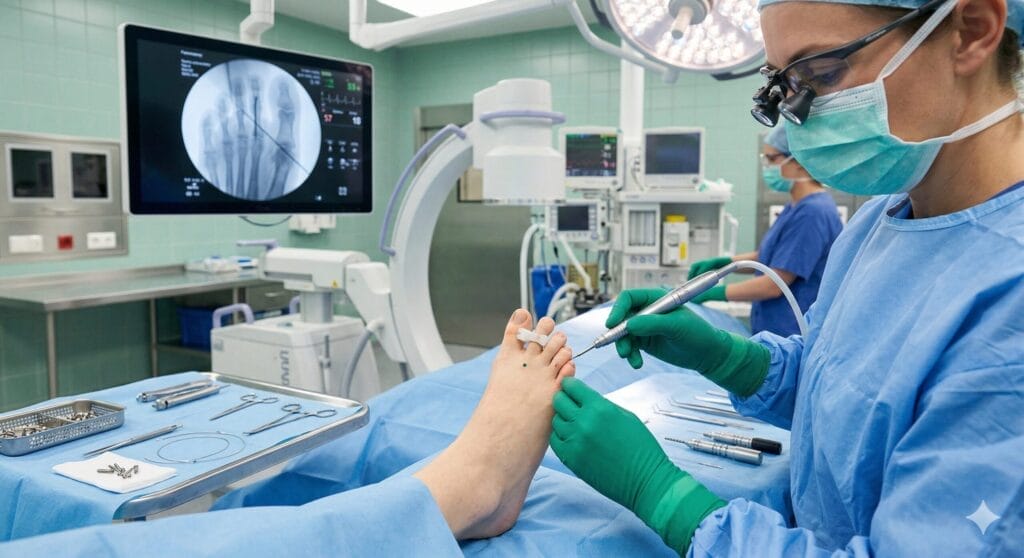
Surgery aims to straighten the toe, relieve pressure points, and restore more natural function within the context of the whole foot. At SFL Medical Group, our podiatric surgeons focus not only on cosmetic improvement but also on long-term stability, shoe comfort, and protection of surrounding joints.
The exact procedure depends on deformity severity, flexibility, and whether multiple toes or joints are involved. Options may include:
Our surgical team, including experienced foot and ankle specialists such as Dr. Peter Hanna, uses both open and minimally invasive approaches depending on anatomy and treatment goals. You can also learn more about our specialists on the SFL Medical Group team page. For patients researching surgical decision-making, FootCareMD’s claw toe resource explains how treatment may differ between flexible and rigid deformities.
Recovery after claw toe correction varies with the procedure and the number of toes treated. Many patients use a special postoperative shoe or boot for several weeks to protect the foot, followed by a gradual return to regular footwear. Physical therapy, range-of-motion exercises, and swelling-control strategies help restore comfort and mobility. In most cases, people can expect meaningful improvement in pain and shoe tolerance once healing is complete and any biomechanical contributors have also been addressed.
Living in Miami encourages activity, including walking, running, dancing, and long days on your feet. That active lifestyle brings enormous benefits, but it also exposes feet to repetitive stress, tight footwear, and occasional injuries that can trigger or worsen claw toes.
We commonly see:
Because SFL Medical Group is a multispecialty practice, we can assess not just the toe deformity, but also broader issues that may affect healing and long-term mobility. For example, patients with circulation concerns may also benefit from evaluation through services such as limb salvage care in Miami when advanced vascular support is needed.
Preventing claw toes starts with everyday decisions that protect the toes from chronic pressure. We often recommend that patients:
In a city where sandals and dress shoes are part of the culture, rotating in supportive footwear for most walking can make a meaningful difference.
For patients with diabetes, neuropathy, or vascular disease, routine foot inspections and professional podiatry visits are essential. We encourage patients to look for skin changes, calluses, redness over toe knuckles, and any new deformities, then bring those findings to our team early. Early detection allows us to intervene with footwear, orthotics, or minor procedures before more serious complications develop.
We want patients to stay active. Instead of avoiding movement, we help adjust activities and equipment so that exercise supports foot health rather than undermining it. That might include cross-training, using cushioned surfaces, or working with our podiatry team to adjust mechanics and footwear for running, walking, or court sports.

Claw toes tend to worsen over time if underlying causes remain untreated. We encourage patients to schedule an evaluation at SFL Medical Group when they notice:
During your visit, we discuss both conservative and advanced options, explain imaging results in plain language, and build a treatment plan that fits your lifestyle and long-term goals. Our aim is straightforward: relieve pain, protect joints, and keep patients moving comfortably on their feet in Miami and beyond.
Almost 8 in 10 Americans have experienced a foot problem at some point in their lives, yet most people couldn’t tell you what a podiatrist

Millions of Americans walk through their day with a silent complaint underfoot, a small, hardened lump pressing against bone, deepening with every step. Foot